Clinically guided perspective from Centrum Pharmacy
At Centrum Pharmacy, we routinely counsel patients that meal timing is not just a lifestyle preference—it is a modifiable metabolic factor. The findings in this area of research are consistent with what we have been advising for years: earlier dinners, earlier cessation of caloric intake, and a larger nutritional emphasis earlier in the day may support better long-term metabolic outcomes.
A growing body of evidence in chrononutrition suggests that when you eat may be nearly as important as what you eat.
Circadian rhythms and metabolic regulation
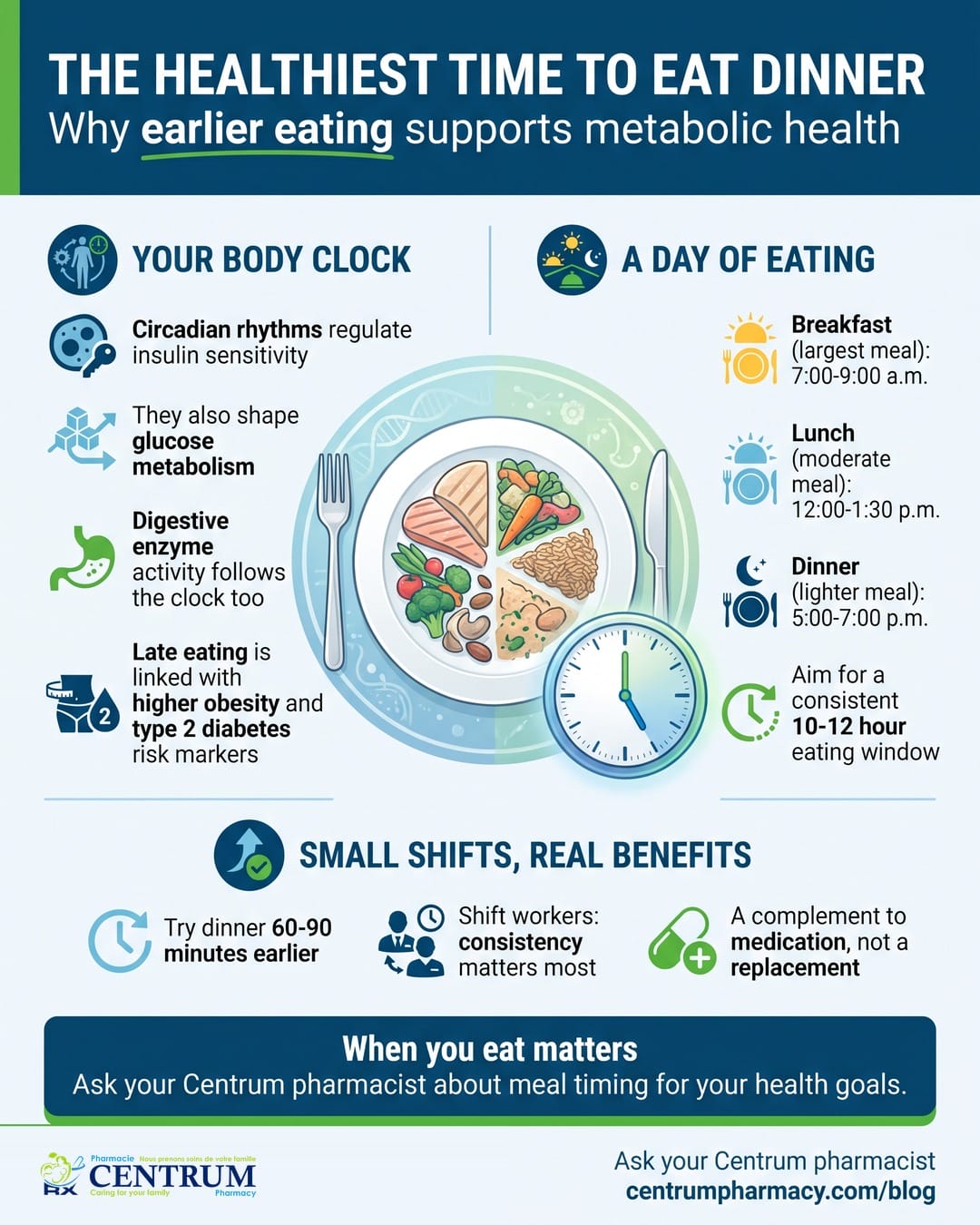
Human physiology operates on a 24-hour internal timing system known as the circadian rhythm. These rhythms regulate:
- Insulin sensitivity
- Glucose metabolism
- Digestive enzyme activity
- Hormonal secretion (including appetite regulation hormones)
Cells across multiple organ systems—including the liver, pancreas, and gastrointestinal tract—follow genetically encoded timing mechanisms that coordinate metabolic efficiency across the day.
When eating patterns are aligned with this biological timing, metabolic processing tends to be more efficient. When eating is shifted later into the evening, this alignment becomes less optimal.
Why late dinners may increase metabolic strain
Research in chrononutrition consistently shows that late-evening eating is associated (not necessarily causally in all cases) with:
- Reduced insulin sensitivity at night
- Altered glucose handling
- Increased likelihood of energy storage rather than utilization
- Higher long-term risk markers for obesity and type 2 diabetes
This does not mean a late dinner is inherently harmful in isolation, but rather that biological timing matters in cumulative metabolic load over time.
Centrum Pharmacy clinical position: earlier eating is preferable
This study’s findings align with long-standing clinical guidance we provide at Centrum Pharmacy:
- The largest meal should ideally occur in the morning or early afternoon
- The smallest meal should be in the early evening
- A consistent 10–12 hour eating window is generally metabolically favorable for most adults
This approach is consistent with circadian biology and helps reduce late-day metabolic strain.
Practical application: what does this look like in real life?
A realistic, structured pattern may look like:
- Breakfast (largest meal): 7:00–9:00 a.m.
- Lunch (moderate meal): 12:00–1:30 p.m.
- Dinner (lighter meal): 5:00–7:00 p.m.
For many patients, simply shifting dinner earlier by 60–90 minutes produces meaningful improvements in energy regulation and appetite control.
Shift workers and flexibility
Shift workers often experience circadian misalignment. In these cases:
- Consistency becomes more important than ideal timing
- A stable 10–12 hour eating window is still beneficial
- Frequent shifting of meal timing should be minimized when possible
The goal is not perfection, but reducing chronic circadian disruption where feasible.
Pharmacist-led counselling perspective
At Centrum Pharmacy, our pharmacists integrate meal timing counselling into broader metabolic health discussions, particularly for patients managing:
- Type 2 diabetes or prediabetes
- Dyslipidemia
- Weight management concerns
- Cardiovascular risk reduction
We emphasize that dietary timing is a complementary strategy, not a replacement for medication or structured nutrition therapy when indicated.
Key takeaway
The evidence base supports a consistent pattern:
Earlier food intake aligns better with human circadian biology and may reduce metabolic disease risk over time.
While flexibility is necessary for modern lifestyles, shifting energy intake earlier in the day is a low-risk, high-yield behavioral intervention.
Stay Connected with Centrum Pharmacy!
If you found this article helpful, don’t forget to like, share, and Follow to stay up to date on our latest health tips, pharmacy updates, and wellness advice.
Come for the Convenience, Stay for the Service.
Caring for Your Family Since 1999
Disclaimer: The medical information on this site is provided as an information resource only and is not to be used or relied on for any diagnostic or treatment purposes. This information does not substitute for professional diagnosis and treatment. Please do not initiate, modify, or discontinue any treatment, medication, or supplement solely based on this information. Always seek the advice of your healthcare provider first. Full Disclaimer.