By Centrum Pharmacy Clinical Team
Delirium is one of the most feared complications among hospitalized seniors, contributing to higher mortality, longer hospital stays, and accelerated cognitive decline. A recent Ontario study sheds light on a modifiable factor that may help reduce delirium risk: the use of first-generation antihistamines.
These older antihistamines—including diphenhydramine, hydroxyzine, cyproheptadine, and chlorpheniramine—are widely recognized for their anticholinergic and sedative effects. While they have been commonly prescribed for a variety of indications, their role in contributing to delirium has been underappreciated.
Study Findings
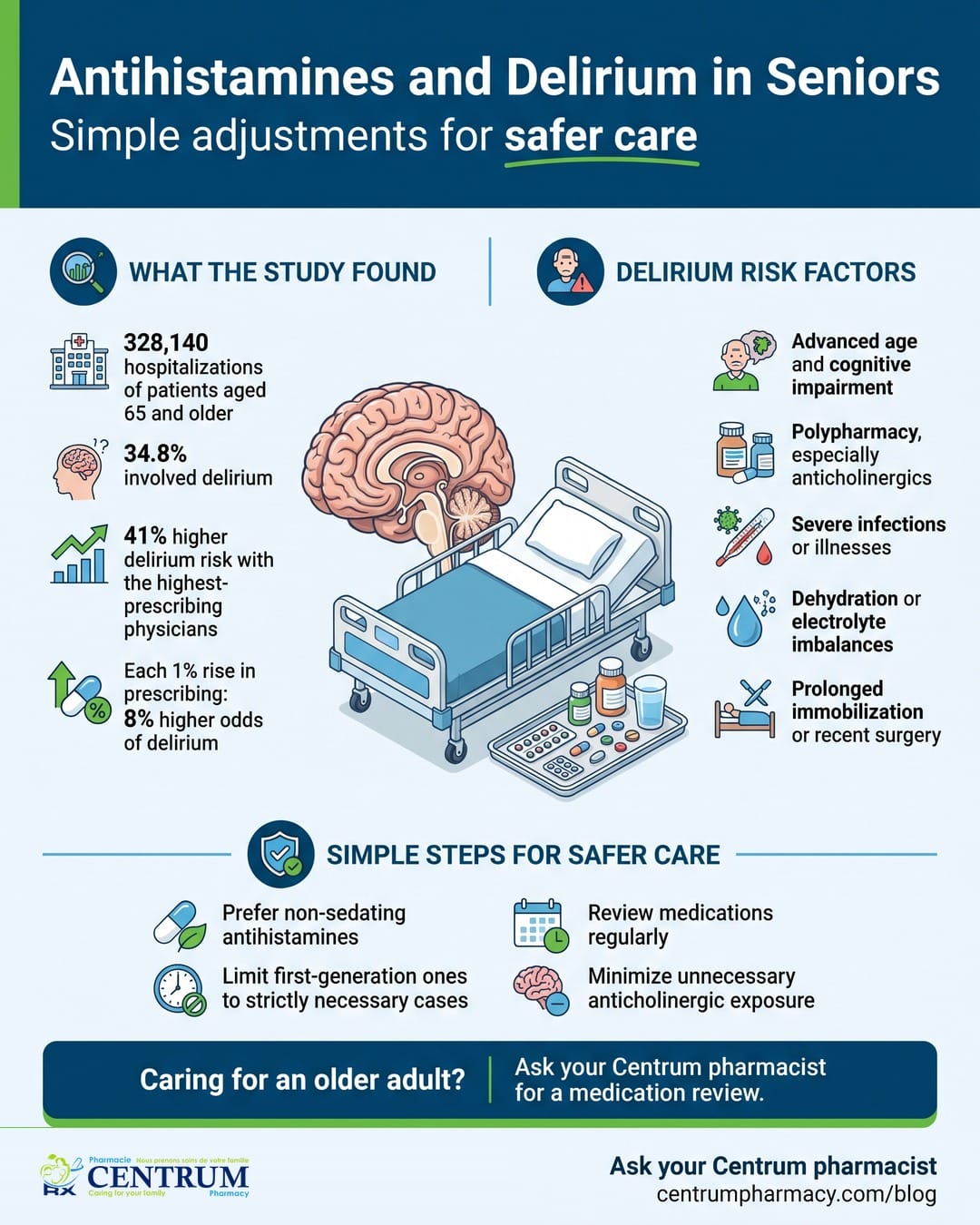
The study, published in the Journal of the American Geriatrics Society, analyzed 328,140 hospitalizations of patients aged 65 and older across 17 Ontario hospitals from 2015 to 2022. Delirium was identified using a validated machine learning tool, and researchers examined the relationship between each physician’s prescribing habits and their patients’ risk of delirium.
Key findings include:
- 34.8% of all hospitalizations involved delirium.
- Patients of the highest-prescribing physicians had a 41% higher risk of delirium compared to those treated by the lowest-prescribing physicians.
- Each 1% increase in first-generation antihistamine prescriptions was associated with an 8% increase in the odds of delirium.
The study underscores a critical insight: prescribing practices directly influence delirium risk in older adults, even after accounting for age, sex, comorbidities, pre-existing dementia, and other risk factors.
Why This Matters
Delirium in hospitalized seniors is often preventable. Established risk factors include:
- Advanced age and pre-existing cognitive impairment
- Polypharmacy, especially anticholinergics, opioids, and benzodiazepines
- Severe infections or illnesses
- Dehydration or electrolyte imbalances
- Prolonged immobilization or recent surgery
- Sensory deprivation or uncontrolled pain
- Residency in long-term care facilities
The study highlights that first-generation antihistamines offer no proven clinical advantage over non-sedating alternatives, which are associated with fewer adverse effects. With significant variability in prescribing practices observed, there is a clear opportunity for clinicians to improve patient outcomes by systematically choosing safer alternatives.
Simple Steps for Safer Care
- Prefer non-sedating antihistamines for most indications.
- Limit first-generation antihistamines to strictly necessary cases.
- Integrate prescribing vigilance into delirium prevention strategies for hospitalized seniors.
- Review patient medications regularly to identify and minimize unnecessary anticholinergic exposure.
Even minor adjustments in prescribing habits can meaningfully reduce the risk of delirium, supporting better cognitive outcomes for older adults. In a rapidly aging population, these small steps can make a major difference.
Stay Connected with Centrum Pharmacy!
If you found this article helpful, don’t forget to like, share, and Follow to stay up to date on our latest health tips, pharmacy updates, and wellness advice.
Come for the Convenience, Stay for the Service.
Caring for Your Family Since 1999
Disclaimer: The medical information on this site is provided as an information resource only and is not to be used or relied on for any diagnostic or treatment purposes. This information does not substitute for professional diagnosis and treatment. Please do not initiate, modify, or discontinue any treatment, medication, or supplement solely based on this information. Always seek the advice of your healthcare provider first. Full Disclaimer.