At Centrum Pharmacy, our pharmacists have long emphasized that diabetes management cannot be understood through glucose readings alone. Blood sugar control is influenced by the entire physiological and psychosocial picture—including stress, sleep, lifestyle, and medication adherence.
The growing evidence linking stress and metabolic disease reinforces what we have observed in clinical practice for years: stress is not a secondary factor in diabetes—it is a central driver of glycemic variability.
The Stress Response and Blood Sugar Regulation
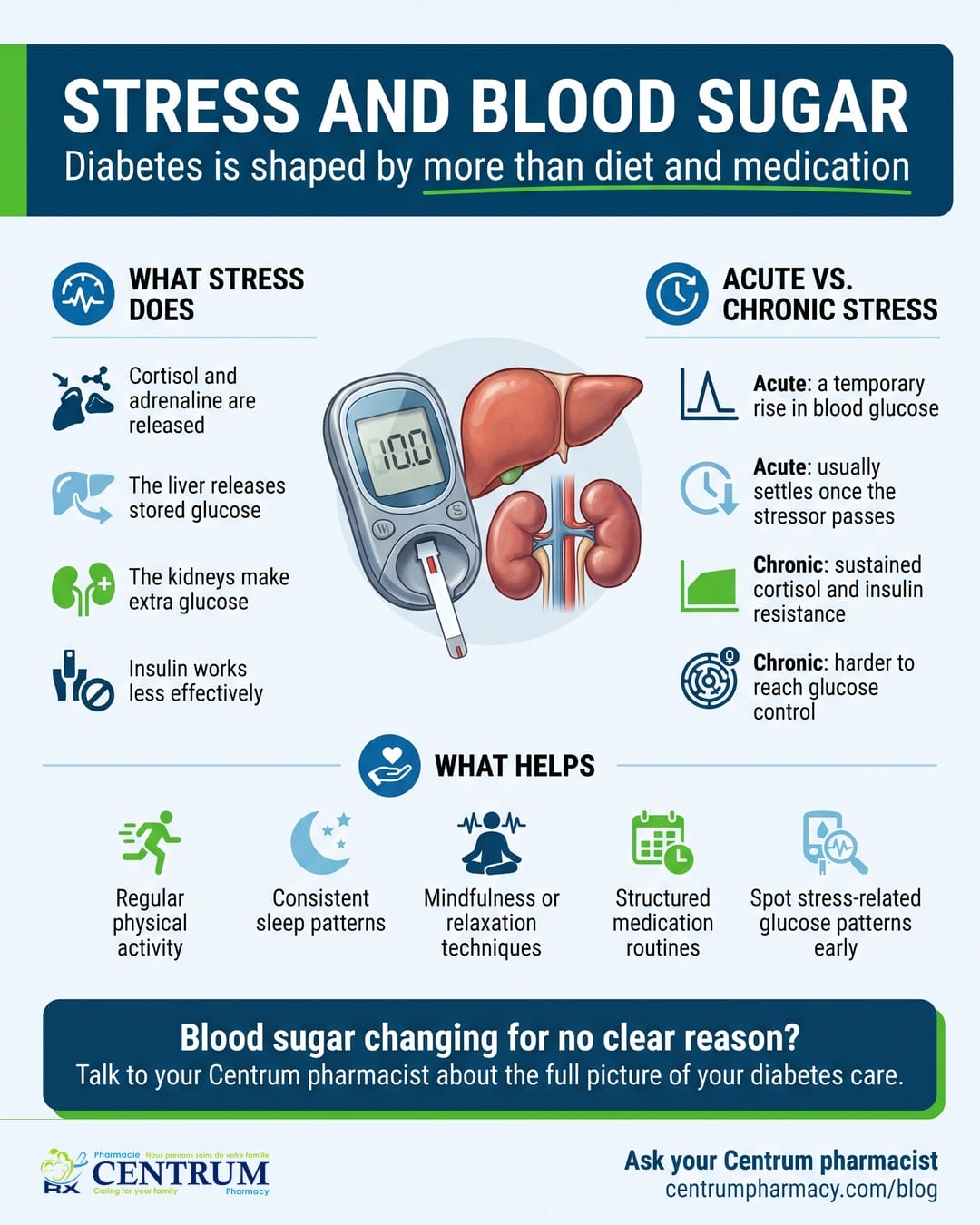
The human body is designed to respond to stress through a coordinated hormonal cascade involving cortisol and adrenaline. These hormones prepare the body for perceived threat by increasing energy availability.
In practical terms, this means:
- The liver releases stored glucose (glycogen breakdown)
- The kidneys contribute additional glucose production
- Circulating stress hormones reduce insulin effectiveness
For individuals without diabetes, this system is self-regulating. However, in diabetes—whether type 1 or type 2—this balance is disrupted. Insulin deficiency or resistance prevents adequate glucose uptake, resulting in elevated blood sugar levels.
Why Stress Raises Glucose Even Without Food Intake
One of the most misunderstood aspects of diabetes is that blood glucose can rise independently of food intake.
During stress:
- Cortisol promotes glucose production in the liver
- Adrenaline increases rapid energy mobilization
- Insulin sensitivity decreases temporarily
This explains why patients may experience elevated glucose readings even when diet and medication remain unchanged.
From a clinical pharmacy perspective, this is a critical counseling point. Many patients incorrectly attribute glucose variability solely to food choices, when in fact neuroendocrine stress responses may be the dominant factor.
Acute vs. Chronic Stress in Diabetes
Not all stress has the same metabolic impact.
- Acute (short-term) stress: Temporary rise in blood glucose; typically resolves once the stressor passes; limited long-term metabolic impact.
- Chronic (long-term) stress: Sustained elevation of cortisol; persistent insulin resistance; increased difficulty achieving glycemic control; greater risk of complications over time.
Chronic stress is particularly important in diabetes management because it compounds existing metabolic dysfunction.
The Clinical Reality: Why Patients See “Unexplained” Glucose Swings
A common scenario in practice is the patient who reports:
“I ate the same food, took the same medication, and exercised the same—but my glucose changed significantly.”
From a pharmacological and physiological standpoint, this is entirely expected. Stress alters:
- Hepatic glucose output
- Peripheral insulin sensitivity
- Counter-regulatory hormone activity
Even subtle differences in emotional stress, work pressure, sleep disruption, or illness exposure can produce measurable changes in glucose levels.
The Pharmacist’s Role in Stress-Aware Diabetes Management
At Centrum Pharmacy, we take a comprehensive approach to diabetes care that goes beyond medication dispensing. Our pharmacists assess:
- Medication effectiveness and timing
- Lifestyle and dietary patterns
- Stress load and psychosocial contributors
- Signs of uncontrolled glycemic variability
We counsel patients on recognizing stress-related hyperglycemia and integrating practical strategies into their care plans, including:
- Medication optimization during high-stress periods
- Timing adjustments for glucose-lowering agents (when appropriate)
- Collaboration with physicians for broader metabolic management
- Education on recognizing non-dietary glucose triggers
Practical Strategies for Patients
While stress cannot be eliminated, its metabolic impact can be reduced through structured approaches:
- Regular physical activity to improve insulin sensitivity
- Consistent sleep patterns
- Mindfulness or relaxation techniques
- Structured medication adherence routines
- Early recognition of stress-related glucose patterns
Importantly, patients should understand that variability is expected and does not always reflect failure in self-management.
Key Takeaway
Diabetes is not solely a disease of diet and medication—it is a condition shaped by the interaction of hormones, physiology, and environment.
Stress is a powerful and often under-recognized factor in blood sugar regulation. Effective diabetes care requires acknowledging this reality and integrating it into routine clinical decision-making.
At Centrum Pharmacy, we remain committed to providing patient-centered, pharmacist-led metabolic care that considers the full complexity of each individual’s health.
Stay Connected with Centrum Pharmacy!
If you found this article helpful, don’t forget to like, share, and Follow to stay up to date on our latest health tips, pharmacy updates, and wellness advice.
Come for the Convenience, Stay for the Service.
Caring for Your Family Since 1999
Disclaimer: The medical information on this site is provided as an information resource only and is not to be used or relied on for any diagnostic or treatment purposes. This information does not substitute for professional diagnosis and treatment. Please do not initiate, modify, or discontinue any treatment, medication, or supplement solely based on this information. Always seek the advice of your healthcare provider first. Full Disclaimer.