Nicotine pouches have sparked significant conversation among patients, healthcare providers, and health regulators across Canada. To help our community make informed choices, the team at Centrum Pharmacy has summarized the latest clinical evidence, safety considerations, and regulatory context surrounding these products.
What Are Nicotine Pouches and How Do They Work?
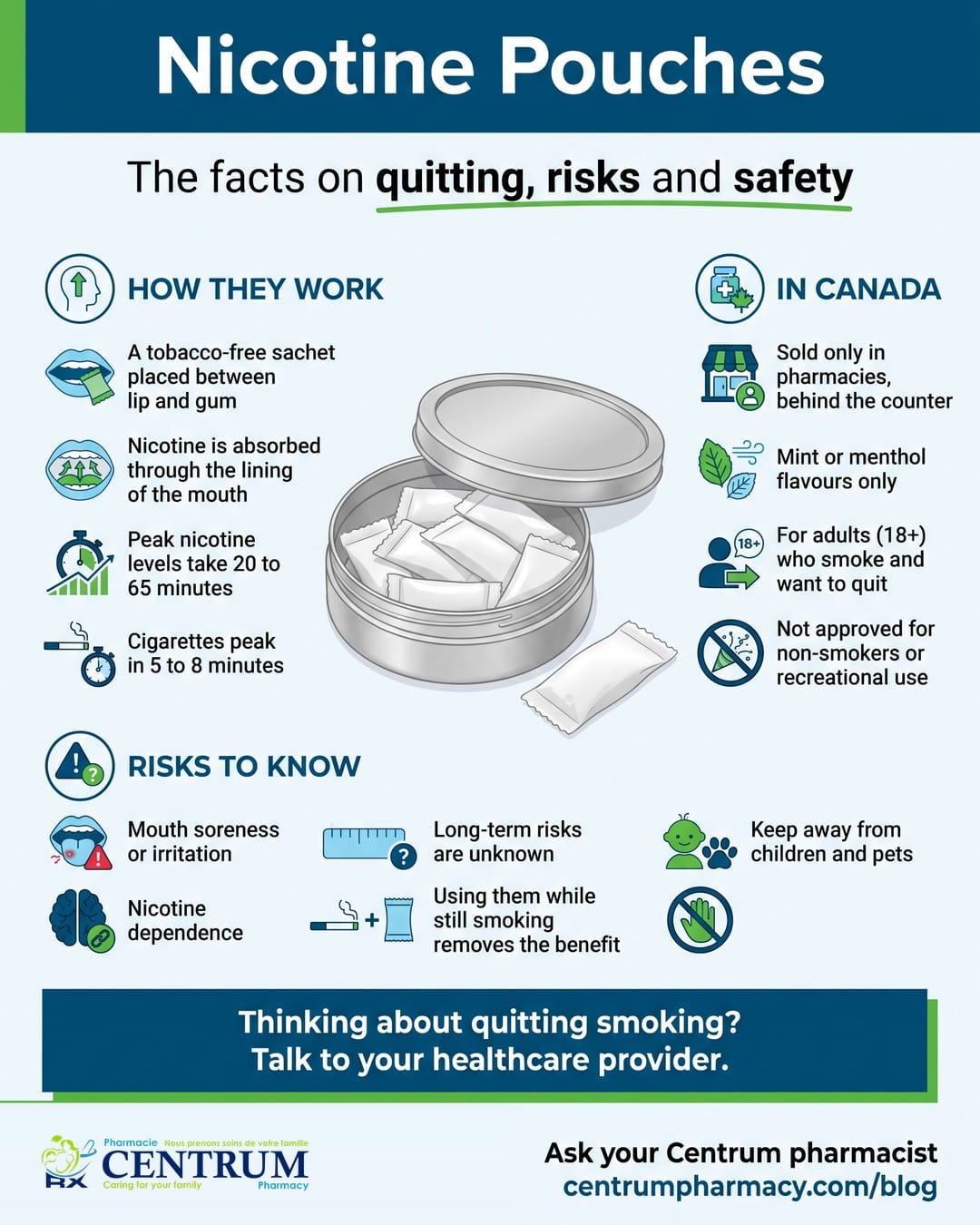
Nicotine pouches are small, white, tobacco-free sachets placed between the upper lip and gum. Nicotine is absorbed directly through the oral mucosa (lining of the mouth) into the bloodstream.
Pharmacokinetics: how they compare to smoking and vaping. Pouches can produce blood nicotine concentrations similar to, or in some cases higher than, electronic cigarettes and traditional combustible cigarettes. Peak nicotine blood levels are reached much slower with pouches — typically taking 20 to 65 minutes — compared to 5 to 8 minutes for smoked cigarettes. Unlike cigarettes or e-cigarettes, pouches do not involve burning tobacco or inhaling aerosolized carrier liquids (like propylene glycol and vegetable glycerin), heavy metals, or heated flavorings into the lungs.
Canadian Regulatory Context & Pharmacy Access
In Canada, nicotine pouches (such as Zonnic, currently authorized up to 4 mg per dose) are classified as Natural Health Products / Nicotine Replacement Therapies (NRTs) intended strictly for adult smoking cessation. To protect youth and non-smokers from nicotine exposure, Health Canada mandates strict distribution controls:
- Authorized pouches can only be sold in pharmacies, kept behind the prescription counter under pharmacist supervision
- Authorized products are limited strictly to mint or menthol flavors to limit recreational allure to youth
- They are strictly for adults (18+) who smoke and are seeking to quit — they are not approved for non-smokers or recreational use
What Does the Clinical Evidence Say About Quitting?
Smoking cessation outcomes. To date, published clinical trials have not proven that nicotine pouches improve long-term smoking cessation success compared to established therapies (like the nicotine patch, gum, or prescription varenicline).
Harm reduction via complete switching. For adult smokers who completely replace combustible cigarettes with authorized pouches, toxicological exposure to carcinogens and tobacco combustion byproducts is significantly lower. However, “dual use” (using pouches while continuing to smoke or vape) eliminates these harm-reduction benefits and maintains high levels of nicotine dependence.
Possible Harms and Adverse Effects
While nicotine pouches avoid pulmonary damage, they carry distinct localized and systemic health risks.
Localized oral effects:
- Mouth soreness, local irritation, or sore throat
- Oral mucosal lesions, including white patches, lumps, or gum abrasions at the site of placement
Systemic and dependence risks:
- Nicotine addiction, since high nicotine bioavailability can sustain or worsen nicotine dependence
- Trace contaminants, as trace levels of tobacco-specific nitrosamines (carcinogens) have been detected in some pouch products, though at dramatically lower levels than in cigarettes or smokeless oral tobacco
- Unknown long-term risks, as the long-term cardiovascular, oral health, and oncologic risks of chronic oral pouch use are currently unknown
- Accidental ingestion, as ingestion of pouches (especially by children or pets) poses a risk of acute nicotine toxicity (nausea, vomiting, rapid heart rate, dizziness, or severe poisoning)
How to Treat Nicotine Pouch Dependency
Currently, there are no published randomized trials specifically evaluating how to treat addiction to nicotine pouches. However, established evidence-based cessation strategies apply effectively, including:
- Clinical counseling and brief interventions (structured behavioral support from a pharmacist or primary care provider)
- Standard pharmacotherapy (combining structured behavioral plans with proven cessation medications, such as varenicline or stepped-down nicotine replacement therapy — e.g., long-acting nicotine patches — under medical guidance)
Key Takeaways for Patients
Talk to a healthcare provider. If you are an adult smoker looking to quit, talk to your healthcare provider about the options that suit your health history.
Keep out of reach. Always store nicotine pouches securely away from children and pets.
Avoid unauthorized products. Unregulated pouches purchased online or imported illicitly may contain dangerously high nicotine doses (above 4 mg) and unknown chemical contaminants.
Stay Connected with Centrum Pharmacy!
If you found this article helpful, don’t forget to like, share, and Follow to stay up to date on our latest health tips, pharmacy updates, and wellness advice.
Come for the Convenience, Stay for the Service.
Caring for Your Family Since 1999
Disclaimer: The medical information on this site is provided as an information resource only and is not to be used or relied on for any diagnostic or treatment purposes. This information does not substitute for professional diagnosis and treatment. Please do not initiate, modify, or discontinue any treatment, medication, or supplement solely based on this information. Always seek the advice of your healthcare provider first. Full Disclaimer.