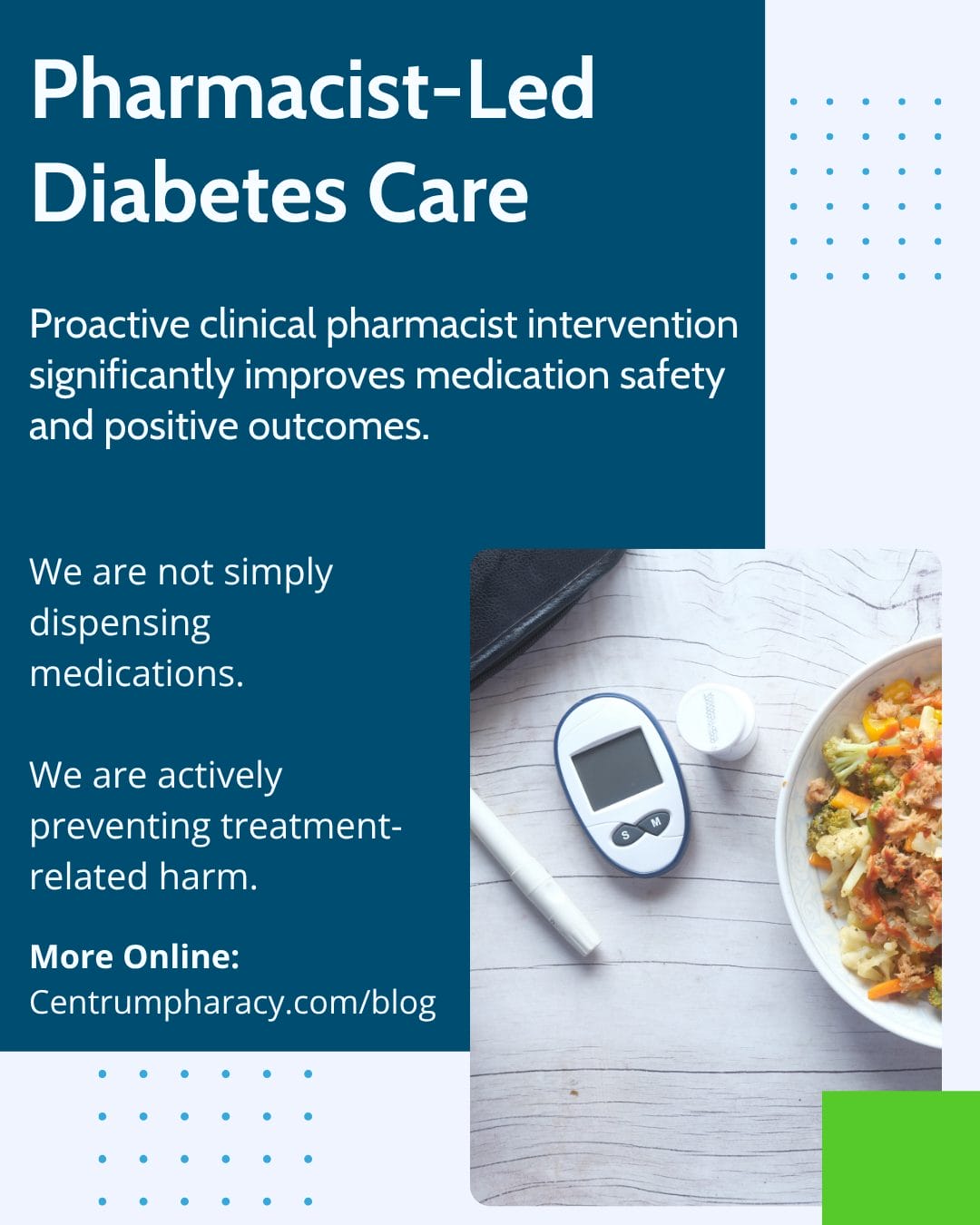
At Centrum Pharmacy, we believe that diabetes care is not just about lowering blood sugar — it’s about doing so safely.
A new randomized clinical trial has shown that proactive clinical pharmacist intervention significantly improves medication safety for patients with type 2 diabetes who are at high risk of hypoglycemia — without worsening overall blood sugar control.
For many patients, especially older adults, this is a critical advancement in reducing preventable harm.
Why Hypoglycemia Matters
Severe hypoglycemia (dangerously low blood sugar) is one of the most serious complications of diabetes treatment. It is associated with:
- Falls and fractures
- Cardiovascular events
- Cognitive decline
- Increased mortality
- Emergency department visits and hospital admissions
Many high-risk patients are treated with medications such as:
- Sulfonylureas
- Rapid-acting (bolus) insulin
- Mixed insulin regimens
While effective at lowering glucose, these therapies can increase hypoglycemia risk — particularly in older adults or those with fluctuating nutritional intake or comorbidities.
The key clinical question is:
Can we reduce hypoglycemia risk without compromising glycemic control?
This study suggests the answer is yes — when pharmacists are actively involved.
What the Study Showed
Researchers developed an evidence-based hypoglycemia prevention algorithm and tested whether proactive pharmacist outreach would improve medication safety compared to usual care.
Study Overview
- 191 adults with type 2 diabetes at high hypoglycemia risk
- Mean age: 71 years
- About half had a recent hypoglycemia-related emergency visit
- Randomized to:
- Pharmacist-led intervention
- Usual care
The pharmacist intervention included:
- 45-minute structured phone consultation
- Individualized A1C target reassessment
- Medication optimization (including deprescribing sulfonylureas or bolus insulin when appropriate)
- Education on hypoglycemia prevention and treatment
- Follow-up every 1–4 weeks
- Use of continuous glucose monitoring where indicated
- Glucagon prescribing when appropriate
Key Results
At six months:
- 28.1% of patients in the pharmacist group were prescribed safer regimens
vs - 15.8% in usual care
Patients in the pharmacist-led group had:
- Fewer hypoglycemia-related emergency visits (0 vs 5)
- No worsening of A1C control
- Similar rates of A1C < 8% compared to usual care
Importantly, simply distributing the safety algorithm to physicians (without pharmacist outreach) did not significantly reduce hypoglycemia-related hospital visits in a separate study.
This highlights a critical insight:
Guidelines alone do not change outcomes.
Proactive pharmacist engagement does.
What This Means for Patients at Centrum Pharmacy
At Centrum Pharmacy, we practice this proactive, team-based approach every day.
Our pharmacists:
- Review diabetes regimens for hypoglycemia risk
- Identify high-risk medication combinations
- Work collaboratively with physicians at Orleans Family Health Clinic
- Individualize A1C targets based on age and comorbidities
- Provide structured medication counselling
- Recommend deprescribing when appropriate
- Ensure patients have glucagon access when needed
- Support continuous glucose monitoring use
This is part of our Complete, Comprehensive, Caring, and Connected Care model — the 4 C’s.
We are not simply dispensing medications.
We are actively preventing treatment-related harm.
Why This Matters for Older Adults
Many patients in this study were in their 70s. In this population:
- Overtreatment can be more dangerous than undertreatment
- Hypoglycemia can trigger hospitalizations
- Falls can lead to long-term loss of independence
Safer prescribing does not mean “less care.”
It means smarter, individualized care.
The Bottom Line
Pharmacist-led proactive outreach:
- Doubled the likelihood of safer prescribing
- Reduced hypoglycemia-related hospital visits
- Maintained stable A1C levels
- Demonstrated scalable, cost-effective patient safety benefits
At Centrum Pharmacy, this is not theory — it is our standard of care.
If you or a loved one has type 2 diabetes and has experienced low blood sugar episodes, falls, confusion, or recent medication changes, speak to one of our pharmacists today.
Safer diabetes care starts with the right medication review.
Stay Connected with Centrum Pharmacy!
If you found this article helpful, don’t forget to like, share, and Follow to stay up to date on our latest health tips, pharmacy updates, and wellness advice.
Come for the Convenience, Stay for the Service.
Caring for Your Family Since 1999
Disclaimer: The medical information on this site is provided as an information resource only and is not to be used or relied on for any diagnostic or treatment purposes. This information does not substitute for professional diagnosis and treatment. Please do not initiate, modify, or discontinue any treatment, medication, or supplement solely based on this information. Always seek the advice of your healthcare provider first. Full Disclaimer.