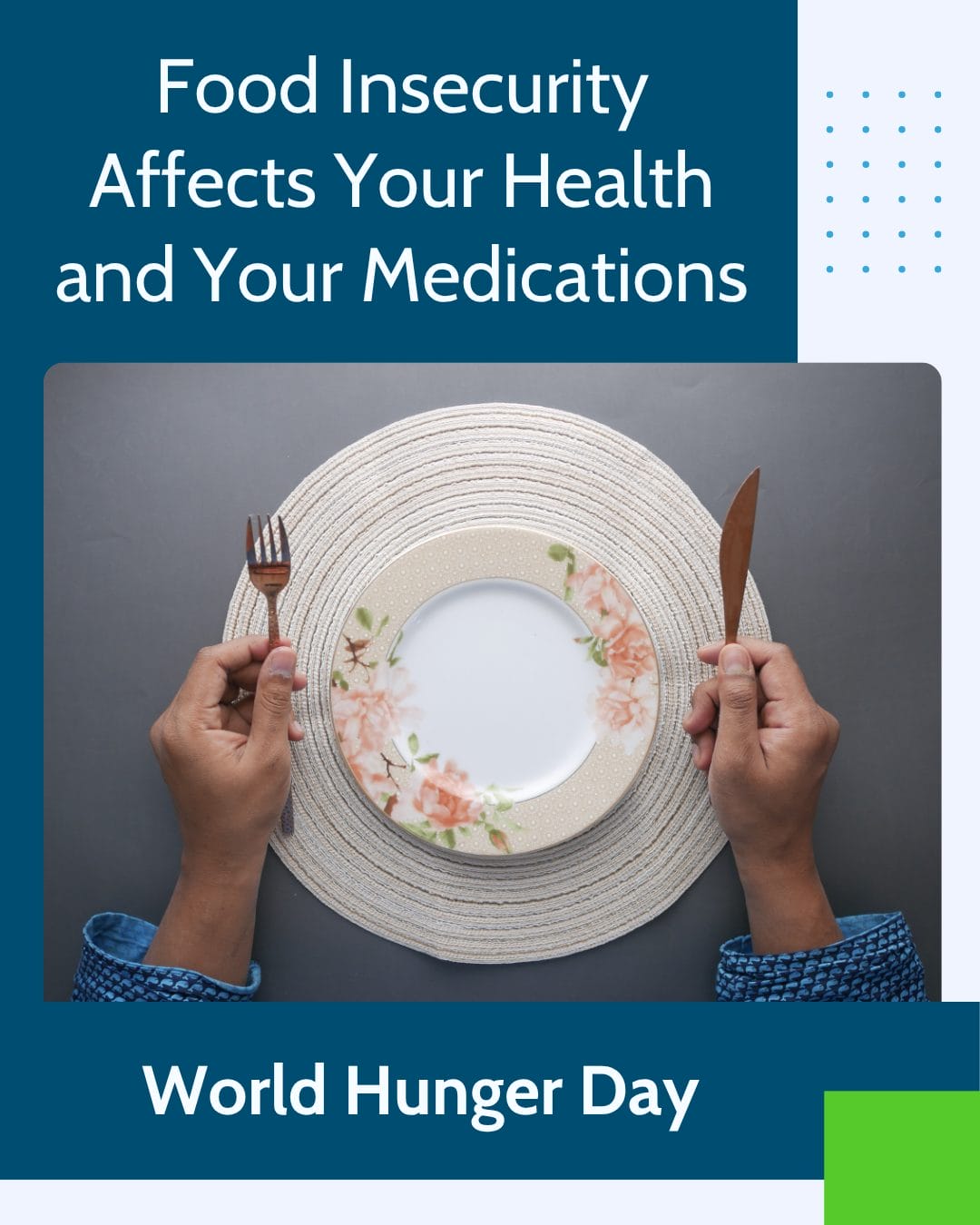
World Hunger Day is observed on May 28, and while the conversation often focuses on global food systems, food insecurity is a reality in Canadian communities too, including here in Ottawa. Over four million Canadians live in food-insecure households, meaning they regularly face uncertainty about whether they will have enough nutritious food to eat.
At Centrum Pharmacy, we see the health consequences of food insecurity in our patients. And one of the most under-recognized consequences is what food insecurity does to medication safety and effectiveness.
Food Insecurity in Canada: Closer Than We Think
Food insecurity is not primarily a problem of poverty in distant countries. It is a persistent feature of the Canadian landscape, affecting families, seniors on fixed incomes, single parents, people with chronic illness, and newcomers navigating a system that is often difficult to access.
Statistics Canada data consistently shows that over four million Canadians live in food-insecure households. In Ottawa, the Ottawa Food Bank supports tens of thousands of residents each month, and food bank usage has increased significantly in recent years as inflation and housing costs strain family budgets.
When families are stretched thin, food is often the first thing to go. And when food goes, medications are next. That clinical reality is something pharmacists see directly.
How Food Insecurity Affects Your Medications
This is a topic that rarely comes up in general health conversations, but it is clinically important.
Many medications require food. Metformin, one of the most commonly prescribed diabetes medications in Canada, causes gastrointestinal side effects when taken on an empty stomach, including nausea, cramping, and diarrhea. Many patients who stop taking it mid-prescription cite stomach upset as the reason. For patients who cannot consistently eat before their dose, this is not a preference problem. It is a barrier to adherence.
NSAIDs such as ibuprofen and naproxen carry a significant risk of stomach irritation and ulceration when taken without food. For patients who rely on these medications for chronic pain management, taking them consistently and safely requires access to regular meals.
Certain antibiotics, iron supplements, and fat-soluble vitamins (A, D, E, and K) depend on food for proper absorption. A patient taking a fat-soluble supplement while eating a diet severely limited in fat may not be absorbing what they think they are.
Warfarin and dietary inconsistency. Warfarin is highly sensitive to vitamin K intake. Patients whose diets fluctuate significantly due to food insecurity may have unpredictable INR levels, which increases the risk of serious bleeding or clotting complications. This is a clinical safety issue, not just a management nuisance.
Protein status and drug metabolism. The liver enzymes responsible for metabolizing most medications depend on adequate protein intake. Patients who are consistently undereating, particularly protein, may metabolize drugs more slowly, effectively altering their dose without any change to the prescription.
The Pharmacist’s Role: Beyond Dispensing
When you pick up a prescription at Centrum, our team does more than verify the drug and the dose. We review your full medication list, ask about how you are taking your medications, and flag situations where food and nutrition affect your safety.
If a patient is struggling to take medication as directed because of access to food, that is a clinical conversation we can have. Here is what that looks like in practice:
Identifying food-medication interactions. We review which medications in your regimen require food for safety or absorption, and discuss practical strategies for taking them safely given your circumstances.
Flagging nutritional deficiencies. Poor dietary access increases the risk of deficiencies in iron, B12, vitamin D, and folate, nutrients that interact with medications and affect overall health outcomes. Our pharmacists can identify where nutritional status may be affecting your results.
Connecting you to your physician at Orleans Family Health Clinic. Across our shared care model, food insecurity screening is part of primary care. When we identify concerns at the pharmacy level, we communicate with your physician to ensure the full picture is addressed.
Pointing you toward community resources. The Ottawa Food Bank and local food programs in Orleans and the broader Ottawa community offer real support, and we can help connect patients without judgment.
The 4 C’s at Centrum, Complete, Comprehensive, Caring, and Connected Care, means that your pharmacist is a partner in your full health picture, not just a medication dispensing service.
Nutrition as Preventive Care
World Hunger Day is also an opportunity to think about nutrition not as a distant humanitarian issue, but as a core preventive health issue right here at home.
Nutrient deficiencies accelerate chronic disease. Inconsistent nutrition complicates chronic disease management. For patients managing diabetes, heart disease, hypertension, or mental health conditions with medication, the gap between adequate nutrition and insufficient nutrition can meaningfully change clinical outcomes.
This is not about dietary optimization. It is about ensuring that patients who are food-insecure are not quietly falling through the cracks of a system that often asks what medications you take, but rarely asks whether you are eating enough to take them safely.
Centrum Pharmacy: Complete, Comprehensive, Caring, and Connected Care
If you are managing a chronic condition on a tight budget, or if you are concerned that your diet may be affecting your medications, come speak with us. These conversations are free, confidential, and clinical.
Visit centrumpharmacy.com or speak with our team in person.
Stay Connected with Centrum Pharmacy!
If you found this article helpful, don’t forget to like, share, and Follow to stay up to date on our latest health tips, pharmacy updates, and wellness advice.
Come for the Convenience, Stay for the Service.
Caring for Your Family Since 1999
Disclaimer: The medical information on this site is provided as an information resource only and is not to be used or relied on for any diagnostic or treatment purposes. This information does not substitute for professional diagnosis and treatment. Please do not initiate, modify, or discontinue any treatment, medication, or supplement solely based on this information. Always seek the advice of your healthcare provider first. Full Disclaimer.