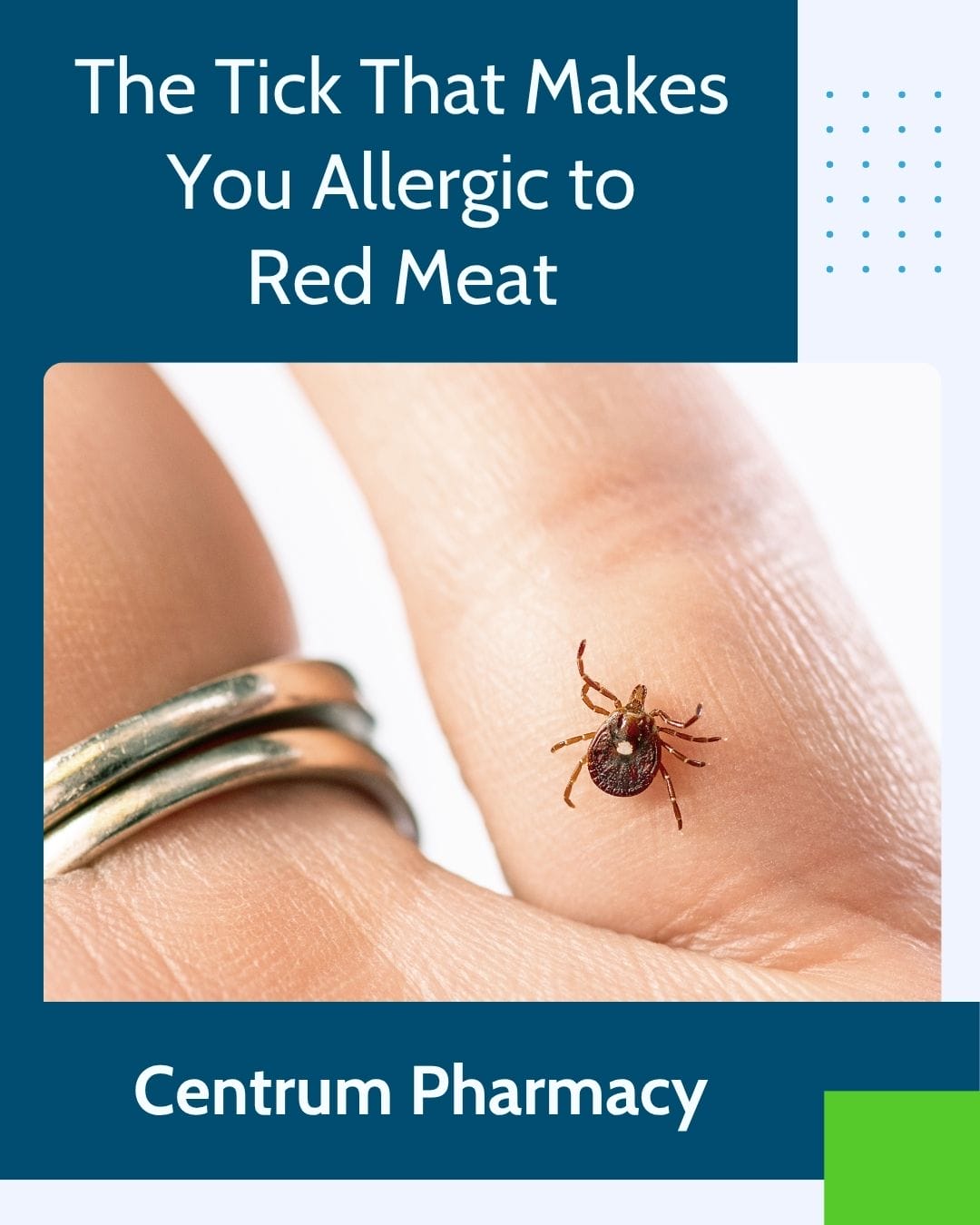
There is a tick that can make you permanently allergic to red meat. It sounds unusual enough that many people assume it’s an exaggeration. It isn’t.
Alpha-gal syndrome (AGS) is a real, increasingly documented allergic condition triggered by the bite of the lone star tick. It causes the immune system to react to a sugar molecule called alpha-galactose, or alpha-gal, which is present in the flesh of most mammals — beef, pork, lamb, venison, bison, and others. Once sensitized, eating red meat can trigger allergic reactions that range from hives and stomach upset to full anaphylaxis. And unlike most food allergies, the reaction is delayed — typically appearing two to six hours after eating, which makes it notoriously difficult to identify without knowing what to look for.
The lone star tick has historically been a concern in the southeastern and south-central United States. That is changing.
What Is Alpha-Gal Syndrome?
Alpha-gal is a carbohydrate molecule found in the tissues of most mammals — with the notable exception of humans and other primates. When a lone star tick bites you, it injects alpha-gal into your bloodstream along with its saliva. In some people, the immune system responds by producing IgE antibodies against alpha-gal. From that point forward, eating red meat introduces the same molecule — and the immune system reacts as if it’s under attack.
Symptoms typically appear two to six hours after consuming red meat or, in some sensitized individuals, mammalian products including dairy and gelatin. This delayed onset is what makes alpha-gal syndrome so frequently missed. A person who eats a steak at 6pm and wakes at midnight with hives, stomach cramps, and difficulty breathing is unlikely to immediately connect the two events.
Reactions range in severity. Mild cases involve itching, hives, and gastrointestinal symptoms. Severe cases involve anaphylaxis, requiring epinephrine. The condition can persist for years or indefinitely, though in some individuals antibody levels decline over time — particularly if they avoid further tick bites.
The Lone Star Tick: What It Looks Like and Where It’s Found
The lone star tick (Amblyomma americanum) is named for the single white spot on the back of the adult female. Adult ticks are approximately 3-4mm in length before feeding, expanding significantly after a blood meal. All three life stages — larva, nymph, and adult — can bite humans, and the nymphal stage in particular is small enough to be easily missed.
The lone star tick prefers wooded areas, dense brush, and the edges of forests where deer populations are present. Unlike some ticks, it is aggressive and will actively move toward a host rather than simply waiting for contact.
Its traditional range covers the southeastern and south-central United States, with particularly high densities in the Gulf Coast states, the mid-Atlantic region, and the Ozarks. Over the past two decades, its range has been expanding northward and eastward, driven by climate warming, growing deer populations, and migratory birds that carry immature ticks across long distances.
Is the Lone Star Tick in Ontario and Canada?
Yes, in limited numbers — and the trend is toward more, not fewer.
Public Health Ontario has published a fact sheet on alpha-gal syndrome acknowledging that while the lone star tick is not established in Ontario, it has been detected in the province. Lone star ticks have been identified in southern Ontario, Nova Scotia, New Brunswick, and Quebec, primarily through passive surveillance — meaning they were found on people, animals, or bird hosts and submitted for identification, rather than being found in established breeding populations.
The distinction matters. A lone star tick found on a person returning from the United States is different from an established colony of lone star ticks living in an Ontario forest. As of now, the tick is not considered established in Canadian ecosystems. However, climate modelling indicates that warming temperatures are making Ontario’s winters increasingly survivable for the species, and the trajectory points toward eventual establishment.
The practical takeaway for Ontarians: the risk of encountering a lone star tick in Ontario is low but not zero, and it is rising. The risk of encountering one while travelling in the US — particularly the southeastern states — is significant.
What to Do If You Find a Tick on You in Ontario
Regardless of the species, the steps for tick removal and follow-up are the same.
Remove the tick promptly. Use fine-tipped tweezers and grasp the tick as close to the skin surface as possible. Pull upward with steady, even pressure. Do not twist, jerk, crush, or apply heat, petroleum jelly, or nail polish to the tick. Once removed, clean the bite area with rubbing alcohol or soap and water.
Save the tick if possible. Place it in a sealed plastic bag or container with a damp paper towel and note the date of the bite and the location on your body. This allows for species identification and, in some regions, pathogen testing.
In Ontario, tick bites are covered under the Minor Ailment Program. This means you can visit Centrum Pharmacy for an assessment without requiring a doctor’s appointment first. Our pharmacists can evaluate the bite, discuss risk factors based on where and when you were bitten, advise on monitoring for symptoms, and refer you appropriately if needed.
If you suspect you may have been bitten by a lone star tick — particularly after travel to the United States — tell the pharmacist. Monitoring for delayed allergic reactions after red meat consumption in the weeks and months following a bite is important.
Recognizing Alpha-Gal Syndrome Symptoms
Alpha-gal syndrome is underdiagnosed in Canada, in large part because there is no dedicated surveillance mechanism and because the delayed reaction pattern is unfamiliar to many clinicians. If you notice allergic reactions appearing two to six hours after eating red meat — particularly if you have had a recent tick bite — alpha-gal syndrome should be considered.
Symptoms to watch for include hives or itchy rash, stomach pain or cramping, nausea, vomiting or diarrhea, shortness of breath or wheezing, and in severe cases, a drop in blood pressure and anaphylaxis. If you experience a severe allergic reaction, call 911.
Reactions can vary from episode to episode. Some people experience only mild symptoms for months before a more severe reaction occurs.
Diagnosis and Treatment
Alpha-gal syndrome is diagnosed with a blood test measuring alpha-gal IgE antibody levels. If you suspect you may have developed the condition, speak to your family physician and specifically request this test — it is not part of a routine allergy panel and must be ordered deliberately.
There is no cure, but the condition is manageable. The primary treatment is strict avoidance of red meat and, for those who are more sensitive, mammalian dairy products and products containing gelatin. Carrying an epinephrine auto-injector (EpiPen) is recommended for individuals who have experienced severe reactions.
Newer treatments are emerging. Omalizumab (Xolair), a biologic therapy used for other allergic conditions, has shown promise in reducing alpha-gal sensitivity in some patients. Oral immunotherapy approaches are also under investigation. Speak to an allergist for guidance on whether these options are appropriate for your situation.
Crucially, avoiding further tick bites appears to allow antibody levels to decline in some individuals over time. Effective tick bite prevention — insect repellent, protective clothing, and thorough tick checks after outdoor activity — is both a preventive and a management strategy.
How Centrum Pharmacy Can Help
If you have been bitten by a tick, you do not need to wait for a doctor’s appointment to be assessed. Under Ontario’s Minor Ailment Program, Centrum Pharmacy can evaluate tick bites, discuss your specific exposure and risk, and advise on next steps including when referral to a physician or allergist is warranted.
If you have already been diagnosed with alpha-gal syndrome, our pharmacists can review your full medication profile for alpha-gal-containing products — certain medications and supplements contain mammalian-derived ingredients that can trigger reactions in sensitized individuals — and help you manage your care with the same Complete, Comprehensive, Caring, and Connected approach we bring to every patient.
We are integrated with the Orléans Family Health Clinic, which means a referral pathway is available when your situation calls for it.
Come for the Convenience. Stay for the Service. Caring for Your Family in Orléans Since 1999.
📍 Centrum Pharmacy — 210 Centrum Blvd, Orléans
Frequently Asked Questions
The lone star tick (Amblyomma americanum) is the tick associated with alpha-gal syndrome, a condition that causes allergic reactions to red meat and other mammalian products. When the tick bites, it injects a sugar molecule called alpha-gal into the bloodstream, which can trigger an immune response that causes the body to react to the same molecule when it’s consumed in food.
The lone star tick has been detected in parts of Canada including southern Ontario, Nova Scotia, New Brunswick, and Quebec, but is not considered an established species in Canadian ecosystems. It is most commonly encountered in the southeastern and south-central United States. Public Health Ontario has acknowledged that climate change is making conditions increasingly favourable for the lone star tick to establish itself in Ontario over time.
Symptoms of alpha-gal syndrome typically appear two to six hours after eating red meat or mammalian products. They include hives or itchy rash, stomach pain, nausea, vomiting, diarrhea, shortness of breath, and in severe cases, anaphylaxis. The delayed reaction is what makes alpha-gal syndrome difficult to recognize — most people do not immediately connect eating a meal hours earlier with an allergic reaction during the night.
Alpha-gal syndrome is diagnosed with a blood test measuring IgE antibody levels specific to alpha-gal. This test must be specifically requested and is not included in standard allergy panels. If you have had tick bites and experience unexplained delayed allergic reactions after eating red meat, ask your physician to order an alpha-gal IgE test.
Yes. Tick bites are covered under Ontario’s Minor Ailment Program, which means Centrum Pharmacy can assess a tick bite without a doctor’s appointment. Our pharmacists can discuss your exposure, advise on what to monitor, and refer you to a physician or allergist if your situation warrants it.
In some people, alpha-gal antibody levels decline over time — particularly if they avoid further tick bites. However, the condition can persist for years or indefinitely. Avoiding red meat and mammalian products prevents reactions, and carrying an epinephrine auto-injector is recommended for people who have experienced severe reactions. Speak to an allergist about newer treatments including omalizumab (Xolair), which has shown promise in reducing sensitivity.
Remove it promptly with fine-tipped tweezers, grasping as close to the skin as possible and pulling upward steadily without twisting. Clean the bite area with alcohol or soap and water. Save the tick in a sealed bag with the date and bite location noted. In Ontario, you can visit Centrum Pharmacy for a minor ailment assessment without a doctor’s appointment. If you develop a severe allergic reaction at any point, call 911.
Stay Connected with Centrum Pharmacy!
If you found this article helpful, don’t forget to like, share, and Follow to stay up to date on our latest health tips, pharmacy updates, and wellness advice.
Come for the Convenience, Stay for the Service.
Caring for Your Family Since 1999
Disclaimer: The medical information on this site is provided as an information resource only and is not to be used or relied on for any diagnostic or treatment purposes. This information does not substitute for professional diagnosis and treatment. Please do not initiate, modify, or discontinue any treatment, medication, or supplement solely based on this information. Always seek the advice of your healthcare provider first. Full Disclaimer.