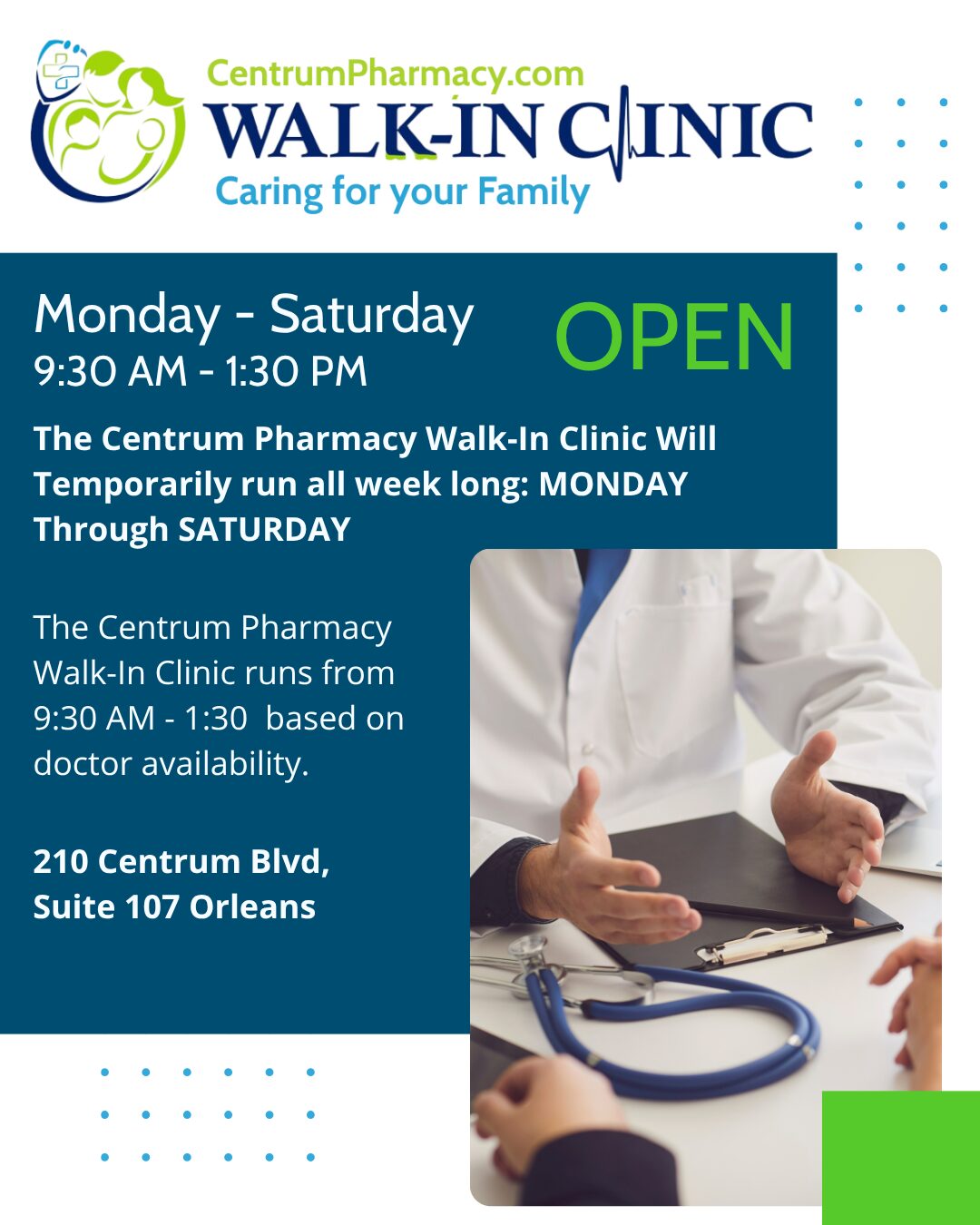
At Centrum Pharmacy and the Orleans Family Health Clinic, our integrated care model ensures that patients receive Complete, Comprehensive, Caring, Connected Care—the 4 C’s that set us apart in primary care access and chronic disease management. Thyroid disease represents one of the most underdiagnosed conditions in Canada, and pharmacists play a vital role in detecting symptoms early, supporting treatment, and ensuring optimal levothyroxine therapy.
If you’re looking for a doctor, we may be able to help connect you with a physician at Orleans Family Health clinic
Approximately 1 in 10 Canadians may have a thyroid condition—yet almost 50% remain undiagnosed. Hypothyroidism (an underactive thyroid) is the most common form, affecting roughly 1 in 20 people. When untreated or undertreated, it can significantly impact energy levels, cognition, metabolism, cardiovascular function, and overall quality of life.
At Centrum Pharmacy, our pharmacists regularly assist patients in understanding their thyroid results, optimizing levothyroxine therapy, and ensuring proper follow-up—while our unparalleled physician recruitment program ensures patients have access to family doctors who can monitor ongoing thyroid health.
Below are five clinical pearls that empower both patients and pharmacists to optimize levothyroxine therapy safely and effectively.
1. Recognize the Often-Missed Symptoms of Hypothyroidism
Hypothyroidism is commonly referred to as the body’s “engine slowing down.”
Symptoms often include:
- Fatigue and low energy
- Weight gain
- Feeling unusually cold
- Hoarse voice
- Constipation
- Dry, coarse skin or brittle nails
- Depression or poor concentration
- Menstrual irregularities
In severe cases, patients may experience slowed heart rate, low blood pressure, decreased respiration, or lowered body temperature.
Conversely, too much thyroid hormone (overtreatment) can cause symptoms of hyperthyroidism, such as:
- Heat intolerance
- Palpitations
- Weight loss
These symptoms occur in over 20% of treated patients, especially when doses are not carefully monitored.
At Centrum Pharmacy, our pharmacists are trained to screen for these clinical signs and help determine when a patient may need further medical evaluation.
2. Understand How Thyroid Function Tests Work
Three key laboratory markers are used to assess thyroid health:
- TSH (Thyroid Stimulating Hormone): the most sensitive and specific measurement for hypothyroidism
- Free T4 (FT4): the primary circulating thyroid hormone
- Free T3 (FT3): the active form of thyroid hormone
A typical normal TSH range is 0.45–4.50 mIU/L.
TSH values >10 mIU/L almost always indicate the need for levothyroxine therapy.
TSH is the primary test used to guide diagnosis and dose adjustments.
FT4 and FT3 levels may help clarify unusual results but should not be used alone to diagnose hypothyroidism or determine levothyroxine dose changes.
Centrum Pharmacy pharmacists help patients interpret these tests—while our family physicians at OFHC provide ongoing oversight, medical diagnosis, and comprehensive follow-up.
3. Monitor Thyroid Levels at the Right Time
Levothyroxine has a long half-life. This means it takes time for the TSH to stabilize.
Testing guidelines:
- Check TSH 6–8 weeks after starting levothyroxine or adjusting the dose
- Once stable, test every 12 months
- Test earlier if symptoms change or if interacting medications are introduced
- Pregnant patients require much more frequent testing
Always consider patient adherence, drug interactions, and recent health changes before interpreting abnormal results.
Centrum Pharmacy uses a pharmacist-physician collaborative approach to ensure timely retesting and dose assessment—with unmatched access to family doctors for long-term oversight.
4. Optimizing Levothyroxine Absorption
Levothyroxine is highly sensitive to food and drug interactions.
To optimize absorption:
- Take levothyroxine on an empty stomach, 30–60 minutes before breakfast
- Avoid coffee, milk, calcium, iron, magnesium, and fiber supplements within 4 hours
- Be consistent: take it the same way every day
- Some medications—such as PPIs, antacids, bile acid sequestrants, and certain antidepressants—can interfere with absorption
Centrum Pharmacy’s clinical pharmacists routinely screen for these interactions and provide personalized counselling to maximize medication effectiveness.
5. Know When Further Investigation Is Needed
If a patient’s TSH remains abnormal despite corrected FT4/FT3 levels, other causes such as pituitary or hypothalamic dysfunction must be explored by a physician.
Additional red flags include:
- Persistent symptoms despite normal thyroid labs
- Dramatic weight changes
- Pregnancy
- New medications impacting thyroid function
- Suspected malabsorption (celiac disease, GI disorders, bariatric surgery)
Our integrated care model ensures these concerns are promptly escalated to OFHC physicians—part of why Centrum Pharmacy leads the region in coordinated primary care access.
Centrum Pharmacy: Your Partner in Thyroid Health
Through our pharmacist-physician partnership and our 4 C’s model, Centrum Pharmacy ensures:
- Complete care: From screening symptoms to interpreting lab results
- Comprehensive care: A full evaluation of medication interactions, adherence, and dosing
- Caring care: Compassionate counselling and individualized support
- Connected care: Seamless linkage to our OFHC physicians for ongoing thyroid disease management
Centrum Pharmacy and OFHC are uniquely positioned to optimize thyroid care—helping patients receive earlier diagnosis, safer treatment, and better long-term outcomes.
Stay Connected with Centrum Pharmacy!
If you found this article helpful, don’t forget to like, share, and Follow to stay up to date on our latest health tips, pharmacy updates, and wellness advice.
Come for the Convenience, Stay for the Service.
Caring for Your Family Since 1999
Disclaimer: The medical information on this site is provided as an information resource only and is not to be used or relied on for any diagnostic or treatment purposes. This information does not substitute for professional diagnosis and treatment. Please do not initiate, modify, or discontinue any treatment, medication, or supplement solely based on this information. Always seek the advice of your healthcare provider first. Full Disclaimer.