Centrum Pharmacy | Healthy Ageing and Brain Wellness Series
Modern medicine has helped people live longer than ever before. However, many Canadians are now spending more years living with chronic illness, memory decline, and reduced quality of life. One of the most important questions in preventive health today is not simply how long we live — but how well we live as we age.
At Centrum Pharmacy, we believe that protecting brain health should begin long before symptoms of memory loss or dementia appear. Research increasingly shows that small, consistent lifestyle habits can help preserve cognitive function, strengthen resilience against age-related decline, and potentially reduce dementia risk over time.
Importantly, protecting brain health does not always require extreme interventions or complicated routines. Many of the most powerful protective activities are enjoyable, social, and easily incorporated into everyday life.
Researchers refer to this protection as “cognitive reserve.” Cognitive reserve is the brain’s ability to adapt, compensate, and remain functional despite ageing or disease-related changes. The stronger this reserve becomes throughout life, the more resilient the brain may be later in life.
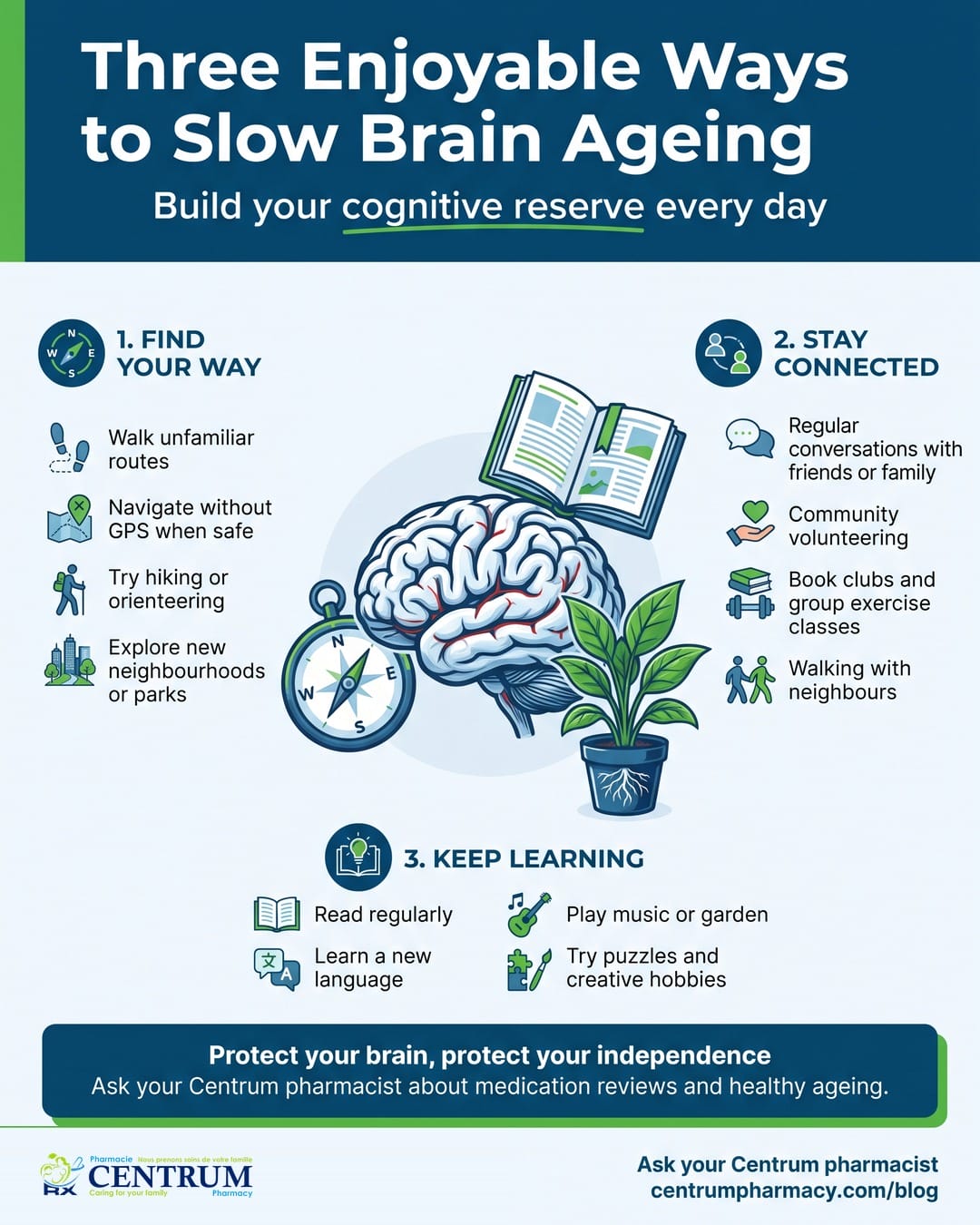
Here are three evidence-informed and enjoyable ways to support long-term brain health.
1. Strengthen Your Brain Through Spatial Navigation
One of the earliest brain regions affected in Alzheimer’s disease is the hippocampus, a structure deeply involved in memory formation and spatial navigation.
Scientists have observed that individuals who regularly use navigation and orientation skills may strengthen this region of the brain. Studies involving taxi drivers, emergency responders, and others who rely heavily on directional memory have demonstrated larger or more active hippocampal regions compared with the general population.
Unfortunately, modern technology increasingly reduces the need to use these cognitive skills. Constant reliance on GPS navigation may reduce opportunities for the brain to actively engage in spatial processing.
Simple daily activities may help stimulate these pathways, including:
- Walking unfamiliar routes
- Navigating without GPS when safe and practical
- Trying hiking or orienteering activities
- Playing spatial reasoning games
- Building or design-oriented hobbies
- Exploring new neighbourhoods or parks
Even modest mental challenges appear to stimulate neural networks involved in memory and orientation.
At Centrum Pharmacy, we encourage patients to think of brain exercise similarly to physical exercise: consistency matters more than intensity.
2. Social Connection Is Brain Protection
Social activity is one of the strongest lifestyle factors associated with healthier cognitive ageing.
Large studies have shown that people who maintain meaningful social relationships and regular interaction often experience:
- Slower cognitive decline
- Better memory performance
- Reduced dementia risk
- Improved emotional resilience
- Lower chronic stress levels
Human interaction activates numerous parts of the brain simultaneously, including:
- Language processing
- Memory retrieval
- Emotional regulation
- Planning and attention
- Problem-solving
Social engagement also helps reduce chronic stress, which is important because prolonged stress exposure may negatively affect the hippocampus and other memory-related brain structures.
Importantly, social stimulation does not need to involve large gatherings or complicated commitments. Protective social activities may include:
- Regular conversations with friends or family
- Community volunteering
- Book clubs
- Faith-based community participation
- Group exercise classes
- Shared hobbies
- Walking with neighbours
- Discussion groups
At Centrum Pharmacy, we often remind patients that social health is a major component of overall health. Isolation can negatively affect not only mental wellness, but also sleep, cardiovascular health, medication adherence, and chronic disease outcomes.
Maintaining strong social connections is therefore a powerful form of preventive healthcare.
3. Lifelong Learning Helps Preserve Cognitive Function
The brain remains adaptable throughout life through a process called neuroplasticity. This refers to the brain’s ability to create and strengthen neural connections in response to new experiences and learning.
Research consistently shows that mentally stimulating activities help preserve cognitive performance as people age.
Learning does not need to be academic or formal to benefit the brain. The key factor is continued novelty, challenge, and engagement.
Examples of brain-stimulating activities include:
- Reading regularly
- Learning a new language
- Gardening
- Taking courses or workshops
- Playing music
- Puzzles and strategy games
- Learning new technologies
- Creative hobbies such as painting or woodworking
- Discussing books, podcasts, or current events
Even later in life, learning new skills appears to strengthen cognitive reserve and improve resilience against age-related decline.
Gardening in particular has attracted attention in ageing research because it combines:
- Physical activity
- Planning and problem-solving
- Sensory stimulation
- Stress reduction
- Outdoor exposure
This combination may offer especially broad health benefits for older adults.
Brain Health Is Connected to Whole-Body Health
Brain health does not exist in isolation. Many medical conditions that affect the heart and blood vessels can also affect the brain.
Protecting cognitive function also means properly managing:
- Blood pressure
- Diabetes
- Cholesterol
- Sleep quality
- Physical activity
- Hearing loss
- Depression
- Medication safety
At Centrum Pharmacy, our pharmacists work closely with patients to support healthy ageing through:
- Medication reviews
- Chronic disease management
- Blood pressure monitoring
- Smoking cessation support
- Diabetes counselling
- Preventive health education
- Lifestyle and wellness guidance
Certain medications may also contribute to confusion, sedation, dizziness, or cognitive impairment in older adults. Pharmacist-led medication assessments can help identify opportunities to reduce unnecessary medication burden and improve safety.
The Bottom Line
Protecting your brain does not require perfection. Small, enjoyable, consistent habits can make a meaningful difference over time.
Activities that challenge the brain, strengthen social connection, and encourage lifelong learning may help build cognitive reserve and support healthier ageing.
Simple lifestyle choices — taking a new walking route, joining a community group, learning a skill, gardening, or having meaningful conversations — can all contribute to long-term brain resilience.
At Centrum Pharmacy, we believe healthy ageing involves complete, comprehensive, caring, and connected care. Supporting cognitive health is an important part of maintaining independence, quality of life, and overall wellness throughout every stage of life.
If you would like support with medication management, chronic disease prevention, or healthy ageing strategies, speak with the pharmacists at Centrum Pharmacy.
Stay Connected with Centrum Pharmacy!
If you found this article helpful, don’t forget to like, share, and Follow to stay up to date on our latest health tips, pharmacy updates, and wellness advice.
Come for the Convenience, Stay for the Service.
Caring for Your Family Since 1999
Disclaimer: The medical information on this site is provided as an information resource only and is not to be used or relied on for any diagnostic or treatment purposes. This information does not substitute for professional diagnosis and treatment. Please do not initiate, modify, or discontinue any treatment, medication, or supplement solely based on this information. Always seek the advice of your healthcare provider first. Full Disclaimer.