A new Canada-wide scientific assessment led by researchers at the Centre for Addiction and Mental Health (CAMH) has delivered a powerful and unexpected message: when all harms are considered together, alcohol causes more overall damage to Canadians than any other drug, including tobacco, opioids, cocaine, methamphetamine, and cannabis.
Published in the Journal of Psychopharmacology, the study used an advanced framework called multi-criteria decision analysis (MCDA) to evaluate 16 commonly used psychoactive substances across 16 different types of harm.
These harms went far beyond overdose or addiction. They included:
- Long-term physical illness
- Mental health effects
- Loss of life
- Family and social disruption
- Economic and healthcare system strain
- Harm to others in the community
By combining how dangerous a substance is with how widely it is used, the researchers calculated a total “population harm” score for each drug.
The Rankings: Alcohol at the Top
Overall harm scores (out of 100) were:
- Alcohol – 79
- Tobacco – 45
- Non-prescription opioids – 33
- Cocaine – 19
- Methamphetamine – 19
- Cannabis – 15
Alcohol ranked highest not because it is always the most toxic per use, but because it combines significant health risks with extremely widespread and socially accepted consumption.
This finding mirrors similar analyses in the UK, Europe, Australia, and New Zealand, reinforcing that legality and normalization do not equal safety.
What This Means for Everyday Patients
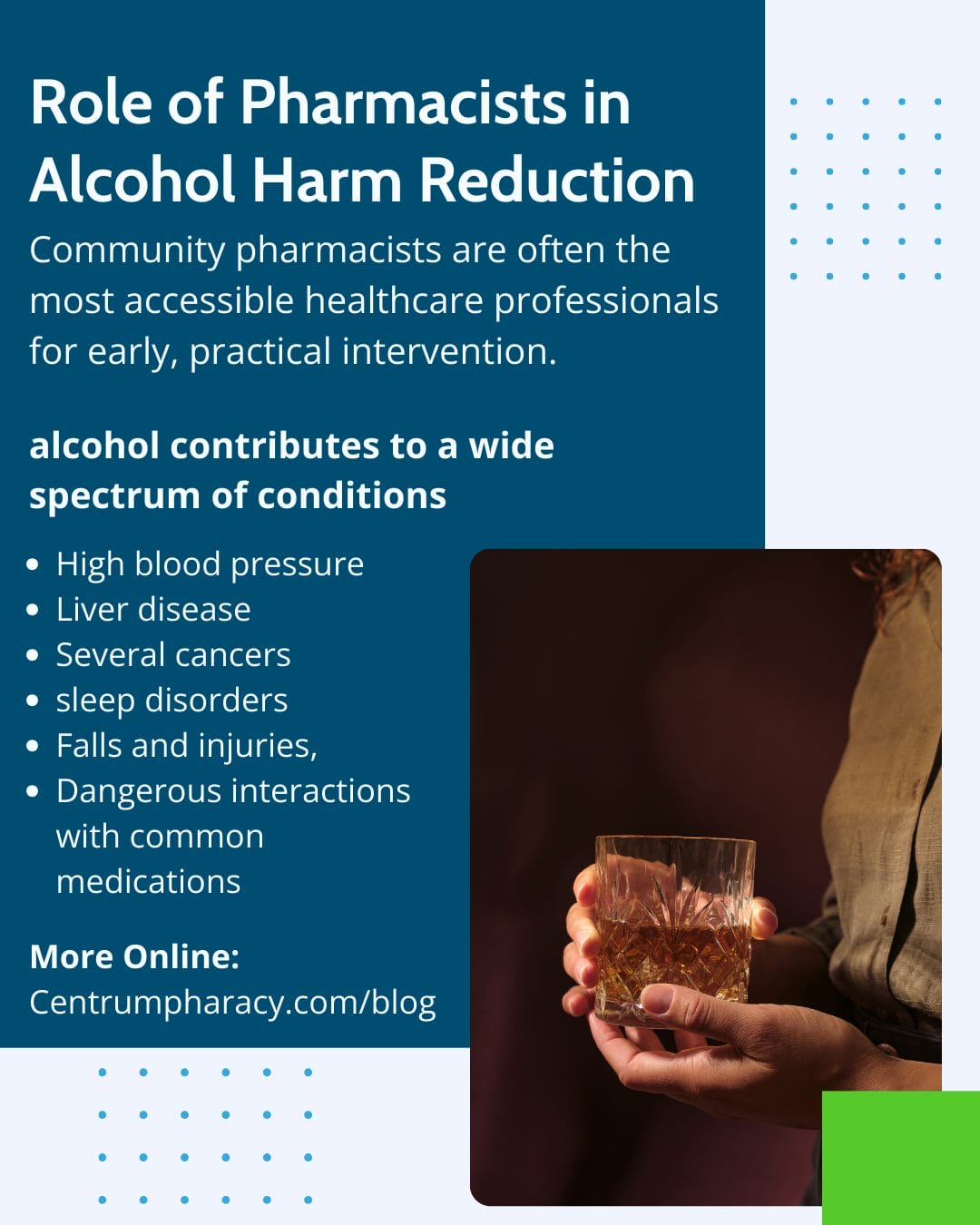
From a clinical perspective, alcohol contributes to a wide spectrum of conditions frequently managed in community practice:
- High blood pressure and cardiovascular disease
- Liver disease
- Several cancers
- Depression, anxiety, and sleep disorders
- Falls, injuries, and motor vehicle collisions
- Dangerous interactions with common medications
Because these effects accumulate gradually, many people underestimate their personal risk.
This is where accessible, pharmacist-led counselling makes a measurable difference.
The Critical Role of Pharmacists in Alcohol Harm Reduction
Community pharmacists are often the most accessible healthcare professionals for early, practical intervention.
At Centrum Pharmacy, pharmacist-led care focuses on:
- Medication reviews to identify alcohol–drug interactions
- Evidence-based counselling on safer consumption or reduction
- Support for patients starting treatment for alcohol use disorder
- Ongoing monitoring of adherence and side effects for medications such as naltrexone or acamprosate
- Rapid access care for related minor ailments such as insomnia, gastritis, anxiety symptoms, and medication side effects
This approach is safer and more effective than relying on uncontrolled retail or online sources of advice or products, where there is no individualized assessment, no follow-up, and no integration with the rest of a patient’s medical care.
Integrated, Team-Based Care with Family Physicians
Centrum Pharmacy is uniquely integrated with Orleans Family Health Clinic and actively supports physician recruitment and patient rostering so that more people have access to continuous, comprehensive primary care.
This integration allows real-time collaboration between pharmacists and family physicians to ensure:
- Consistent messaging and coordinated treatment plans
- Rapid follow-up when medication adjustments are needed
- Seamless referral for medical or mental health assessment when indicated
This model reflects our commitment to the 4 C’s of care:
- Complete – addressing both medications and underlying health risks
- Comprehensive – prevention, screening, treatment, and follow-up
- Caring – non-judgmental, patient-centred conversations
- Connected Care – pharmacists and physicians working as one team
Evidence-Based Policy and Patient-Level Action
The research also highlights that regulation and access strongly influence harm. Proven population-level strategies include pricing controls, limiting availability, and restricting marketing.
At the individual level, the most effective interventions are:
- Brief, structured counselling
- Ongoing behavioural support
- Appropriate use of evidence-based medications
These are precisely the services that pharmacist-led, clinic-integrated community pharmacies are designed to deliver.
A Safer Alternative to Fragmented Care
When patients seek help through large retail chains, online sellers, or informal advice, care becomes fragmented and reactive.
Centrum Pharmacy offers a different model:
- Direct collaboration with family doctors
- Immediate access to medication expertise
- Minor ailment assessment and treatment
- Longitudinal follow-up rather than one-time transactions
By combining pharmacist-led counselling with tight integration into primary care, we reduce risk, improve outcomes, and ensure that alcohol-related health concerns are addressed early and effectively.
If you have questions about alcohol use, medication interactions, or safe ways to cut back, speak with a Centrum pharmacist. Early guidance can prevent long-term harm, and coordinated care can change the trajectory of your health.