If you take a GLP-1 medication such as semaglutide or tirzepatide, you may have seen recent headlines about vision loss. Here’s what the new warning says, how rare the risk is, and what to watch for.
What the FDA Announced
On November 9, 2026, the US Food and Drug Administration (FDA) asked the makers of every GLP-1 medication to add a warning about a rare eye condition called NAION to their labels. The warning covers the whole class, including semaglutide, tirzepatide, liraglutide and dulaglutide.
This is a US labelling change. It doesn’t change how these medications are prescribed or dispensed in Canada, and European regulators already list NAION as a very rare side effect of semaglutide.
What Is NAION?
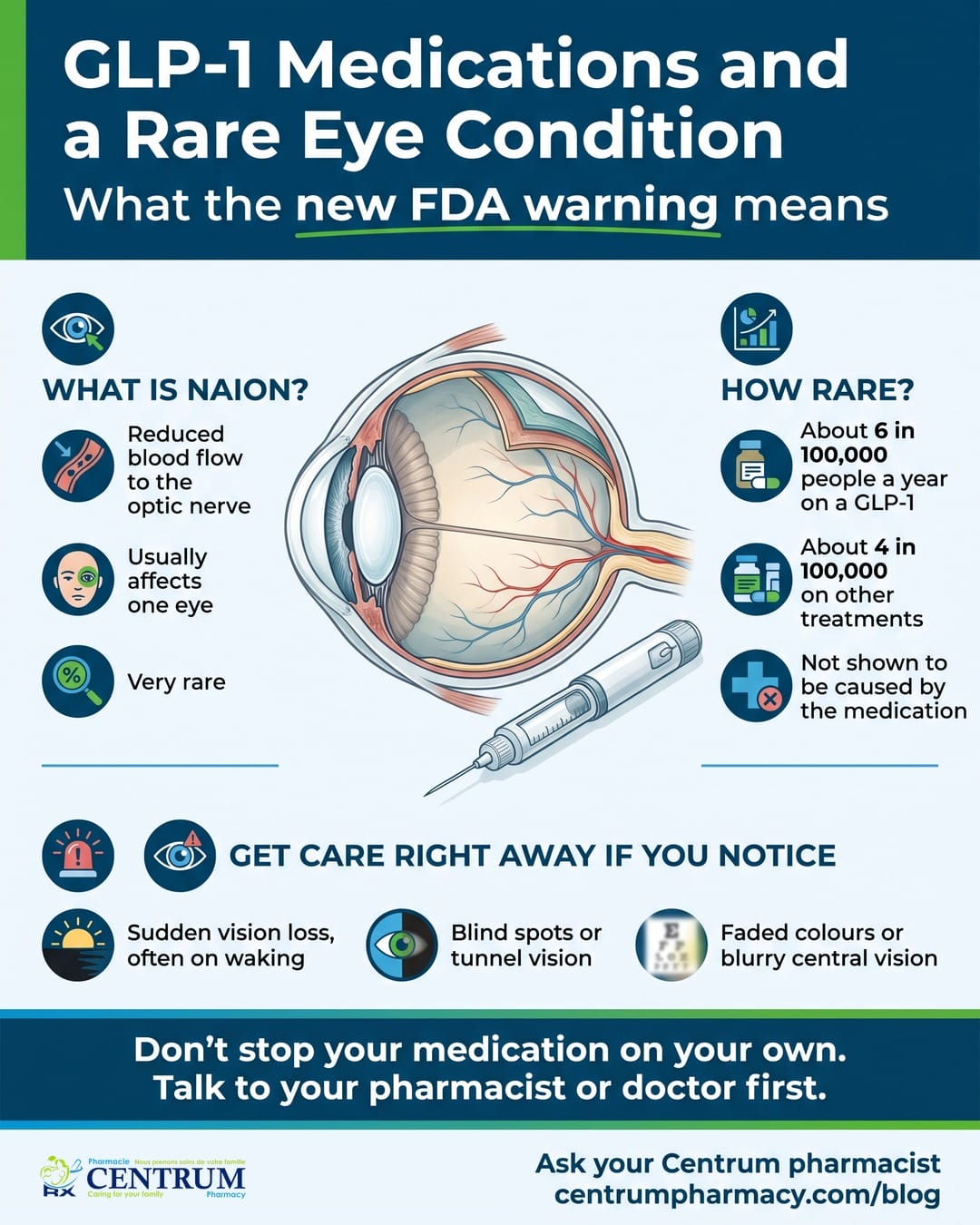
NAION (non-arteritic anterior ischemic optic neuropathy) happens when blood flow to the front of the optic nerve drops. It usually causes sudden, painless vision loss in one eye, often noticed on waking. Some vision can come back, but the loss can be permanent.
How Rare Is It?
Very rare. The FDA pooled 126 clinical trials with about 134,000 patients. NAION happened in about 6.4 people per 100,000 for each year on a GLP-1 medication, compared with about 3.8 per 100,000 on other treatments. That’s a difference of roughly 3 cases per 100,000 people a year.
The FDA says it has not established that GLP-1 medications cause NAION, and how they might raise the risk isn’t understood. Many people who take them already have conditions that raise the risk on their own: smoking, diabetes, high blood pressure, sleep apnea, anemia and kidney disease.
Symptoms to Watch For
Get medical care right away if you notice, usually in one eye:
- Sudden vision loss, often noticed when you wake up
- Blind spots or tunnel vision
- Colours that look faded or washed out
- Blurry or hazy central vision
Sudden vision loss is always an emergency, whatever medications you take. Go to an emergency department or see an eye doctor the same day.
Should You Stop Your Medication?
No, not on your own. For most people, the benefits of these medications for blood sugar, weight and heart health far outweigh a very rare risk. If you’ve had NAION before, or you develop it, talk to your doctor about whether to keep taking your GLP-1 medication.
Talk to Us
Our pharmacists at Centrum Pharmacy can go over your GLP-1 medication, your other risk factors and what to watch for. We covered an earlier FDA label change in our post on the FDA removing the suicide risk warning from GLP-1 labels, and our guide to GLP-1 medications for patients in Ontario covers the basics.
Stay Connected with Centrum Pharmacy!
If you found this article helpful, don’t forget to like, share, and Follow to stay up to date on our latest health tips, pharmacy updates, and wellness advice.
Come for the Convenience, Stay for the Service.
Caring for Your Family Since 1999
Disclaimer: The medical information on this site is provided as an information resource only and is not to be used or relied on for any diagnostic or treatment purposes. This information does not substitute for professional diagnosis and treatment. Please do not initiate, modify, or discontinue any treatment, medication, or supplement solely based on this information. Always seek the advice of your healthcare provider first. Full Disclaimer.